By Louise Sally Trapps
Listen, Let Go, Lift:
The Soul of Sal and the African Diaspora

Santa Maria beach – Sal Island
Relaxing into Diaspora: A Portal of Resistance and Identity
Relax, Refresh, and Replenish” are the pearls that dropped into my spirit at the site of Sal Island. Beneath the surface of this Cape Verdean island lies a history and cultural depth that echo the broader struggles, movements, and memories of Pan-African identity. Though often marketed today as a destination of escape and leisure, Sal is a site of diasporic departure, colonial legacy, creolized resistance, and Black internationalist thought Fradique, 2009; Hartman, 2000. It offers travelers and scholars an opportunity to explore not only its sandy beaches but also its role in the evolving narrative of African-descended peoples across the globe. Beyond its image of a tropical escape, Sal Island invites the African diaspora to relax into its landscapes, refresh their connection to a shared but fractured history, and replenish a cultural identity shaped by migration, memory, and enduring resilience (Resende-Santos, 2015).
Sal Island as a Site of Pan-African Memory
Often viewed as a sunny tourist retreat, Sal Island also carries a complex history shaped by migration, colonial rule, and cultural resilience. Beyond the beaches promoted in travel brochures, its past is marked by Portuguese colonization, creole traditions, and the movements of the African diaspora. For many African-descended communities, Sal is more than a destination—it’s a place to reflect on identity, memory, and belonging. Sal becomes more than a destination; it’s a living archive of movement, memory, and identity. Through this lens, its significance reaches beyond leisure and into the heart of diasporic experience (Fradique, 2009; Gyasi, 2016; Hartman, 2007).
Literary Reflections on Belonging
Refreshing the Search for Belonging in Homegoing
Yaa Gyasi, a Ghanaian-American novelist, explores intergenerational trauma and identity in her acclaimed novel HomegoingOne of the central themes in Yaa Gyasi’s Homegoing is the search for belonging; Marjorie grapples with questions of status across generations. She reflects on the fragmented nature of her identity and the search for a place to call home: “I had been looking for a place to belong, and I could not find it anywhere”(Gyasi 234). Marjorie’s words in Homegoing capture a familiar feeling among many Cape Verdeans—being caught between different parts of one’s identity. Their connection to Africa and the lasting influence of Portuguese colonization has created a cultural mix that isn’t always easy to navigate.
In Lose Your Mother, Saidiya Hartman a scholar and writer known for her work on slavery and memory takes this search further. She travels to Ghana in hopes of understanding what was taken from her family during slavery. Her journey isn’t just about visiting a place; it’s about facing the gap between herself and the people she comes from. “I was trying not to lose my mother, trying to find her, to imagine her, to reckon with her absence” (Hartman 2007). For Hartman, and I agree that the idea of belonging can be tied to memory, loss, and the need to rebuild a connection that history tried to erase. This exploration of identity through the search for roots is a theme that resonates with the Cape Verdean experience. For many, especially those in the diaspora, the search for a place to belong is about reclaiming a lost or fractured history, an effort to connect with something disconnected by the legacies of slavery, colonization, and migration (Resende-Santos, João, 2015). In this context, the search becomes a form of replenishment a way to restore what has been lost across generations and to recover a sense of wholeness through reconnection with one’s origins
Moreover, Chimamanda Ngozi Adichie’s a Nigerian author, public intellecutal emphasizes the risks of reducing people to one narrative in her TED Talk The Danger of a Single Story.(Adichie, 2009). One may say this perspective gives us a glimpse of the Cape Verdean dual identity of Africa and Europe, which opposes singularity; Adichie’s implication reminds us to embrace the fullness of cultures shaped by diverse influences..
Music and Cultural Memory
In diaspora communities, festivals like São João Baptista in Rotterdam maintain Cape Verdean traditions. Cesária Évora’s known as the “Barefoot Diva” of Cape Verde music expresses emotional depth in her iconic morna songs. Her vibe is filled with strength, sorrow and encapsulates what it means to live with inherited displacement and layered identities (Evora, 2002). Her voice shapes the lived experiences of many Cape Verdeans and diaspora members, connecting listeners to a cultural history shaped by migration and colonization. Blending religious and artistic elements, these events keep heritage alive for younger generations. In contrast, Langston Hughes is a voice that echoes of the Harlem Renaissance and captures a sense of endurance and inclusion in his poem I, Too, where he declares, “I, too, sing America” (Hughes, 1926). Comparably Hughes and Cape Verdeans claim their place in broader cultural conversations, asserting their voice despite histories of marginalization.
Ritual, Resistance, and Restoration: Relaxing into Ancestral Memory
Sal Island also holds stories in its landscapes. Once a site for salt production powered by enslaved labor, its folklore, such as the tale of the “Fantasma da Pedra,” a ghost said to haunt the salt flats, preserves painful histories (Halter, 1993; Barker, 1996). These local legends reflect the weight of memory and resistance. Musically, genres like morna, coladeira, and funaná showcase African influence, passed down through rhythm and melody. The film The Last King of Scotland similarly engages with African identity under colonialism. Its themes of power, legacy, and personal conflict mirror Cape Verde’s struggle with its dual African-Portuguese roots (Macdonald, 2006).
Meanwhile, modern festivals such as Nossa Sra. De Piedade, held on August 15, brings together music, faith, and tradition. On this day, beachside concerts and processions celebrate cultural pride (The Cape Verde Experience, n.d.).
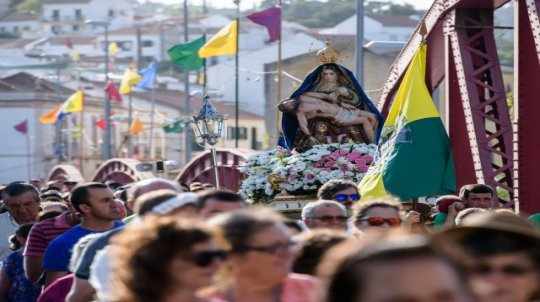
(“Festas em Honra”)
Refresh, Replenish, Relax: Restoring Balance and Empowerment
Exploring Sal Island as a site of Pan-African memory uncovers layered histories of migration, creole resistance, and diasporic identity. Literary reflections like Homegoing refresh the search for belonging across generations, while music and cultural memory, through morna and celebration, express sorrow, sound, and strength. Ritual, resistance, and restoration are embedded in the island’s stories, songs, and ceremonies. For students, educators, and historians, Sal invites us to relax into ancestral memory, refresh our understanding of identity, and replenish the legacy of African and diasporic resilience. We carry forward pain, pride, healing, and history through this lens.
Recommended Reading
- Fradique, Samira, director. The Lost Island RTF, Africa, 2009 (Fradique, 2009).
- Evaristo, Bernardine. Girl, Woman, Other. Grove Press, 2019.
- Césaire, Aimé. Discourse on Colonialism. Monthly Review Press, 2000.
- Philip, M. NourbeSe. Zong!. Wesleyan University Press, 2008.
- The Stuart Hall Project. Directed by John Akomfrah, Smoking Dogs Films, 2013
- The African Americans: Many Rivers to Cross. Hosted by Henry Louis Gates Jr., PBS, 2013.
- Davis, Angela. How Does Change Happen? TEDxWomen, 2016.
https://www.ted.com/talks/angela_davis_how_does_change_happen - Trevor Noah. Born a Crime: Stories from a South African Childhood (audiobook
Works cited
Adichie, Chimamanda Ngozi. The Danger of a Single Story. TED, July 2009, http://www.ted.com/talks/chimamanda_ngozi_adichie_the_danger_of_a_single_story.
Barker, Francis. The Culture of Violence: Essays on Tragedy and History. University of Chicago Press, 1996.
Évora, Cesária. Café Atlantico. RCA Victor, 2002.
Festas da Nossa Senhora da Piedade.” PortugalEvents.net, 8 set. 2022, https://www.portugalevents.net/eventos/beja/odemira/3183/festas-da-nossa-senhora-da-piedade#google_vignette.
Fradique. Blood and Salt. Directed by Fradique, 2009.
Gyasi, Yaa. Homegoing. Alfred A. Knopf, 2016.
Halter, Marilyn. Between Race and Ethnicity: Cape Verdean American Immigrants, 1860–1965. University of Illinois Press, 1993.
Hartman, Saidiya. Lose Your Mother: A Journey Along the Atlantic Slave Route. Farrar, Straus and Giroux, 2007.
Hughes, Langston. “I, Too.” The Weary Blues, Alfred A. Knopf, 1926.
Macdonald, Kevin, director. The Last King of Scotland. Fox Searchlight Pictures, 2006.
Resende-Santos, João. Cape Verdeans in the United States: Assimilation and Cultural Preservation. LFB Scholarly Publishing, 2015.
 Pan African Studies Encyclopedia