
by See Vang
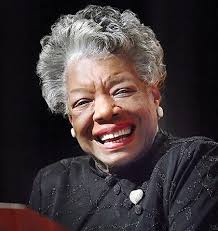
Marguerite Annie Johnson, known to the world as Maya Angelou, was born on April 4, 1928, in St. Louis, Missouri. Her early life was shaped by hardship and trauma. After her parents’ divorce, Angelou and her brother were sent to live with their grandmother in Stamps, Arkansas (Angelou, Caged Bird). At eight, while living in St. Louis with her mother, she was sexually abused by her mother’s boyfriend. After he was killed following his release from jail, Angelou fell silent, believing her voice caused his death. This silence lasted for nearly five years, during which she developed a love for literature and poetry (Gillespie).
Despite these early traumas, Angelou’s artistic spirit thrived. As a teenager, she became San Francisco’s first Black female streetcar conductor and later studied drama and dance. She toured internationally as a performer and lived in Ghana during the 1960s, where she connected with global Black thinkers and activists (Johnson 45). During this time, she worked closely with leaders like Malcolm X and Martin Luther King Jr., contributing to the global Pan-African and civil rights movements (Bloom 12).
Angelou’s literary breakthrough came with her autobiography I Know Why the CagedBird Sings (1969), a powerful account of her early life that addressed racism, sexual violence, and the search for identity. It was the first of seven autobiographies, including Gather Together in My Name and The Heart of a Woman, that documented her journey through motherhood, performance, activism, and literary acclaim (Angelou, Gather Together). These works helped redefine the memoir genre by centering the experiences of a Black woman in a deeply personal and political way (Walker 102). She was also a prolific poet, with collections such as And Still I Rise and Phenomenal Woman, which became iconic celebrations of Black womanhood and resilience. Her poem “Still I Rise” remains one of her most quoted pieces, encapsulating the defiant strength that marked her life and writing (Angelou, And Still I Rise).
Angelou also broke ground in film and television. She wrote the screenplay for Georgia, Georgia (1972), the first by a Black woman to be produced as a film. She directed Down in the Delta (1998) and acted in several productions, including Roots and Poetic Justice. In 1993, she was invited to recite her poem “On the Pulse of Morning” at President Bill Clinton’s inauguration, becoming only the second poet to receive such an honor (Bloom 89). Throughout her life, she received more than 50 honorary degrees and was awarded the Presidential Medal of Freedom by President Barack Obama in 2011, the nation’s highest civilian honor (Johnson 112). Maya Angelou passed away on May 28, 2014, at the age of 86. Her legacy endures not only in literature but in the broader cultural and social movements she helped shape. Through her powerful words and enduring spirit, Angelou remains a global symbol of artistic brilliance, moral courage, and Black womanhood.
Works Cited
Angelou, Maya. And Still I Rise. Random House, 1978.
Angelou, Maya. Gather Together in My Name. Random House, 1974.
Angelou, Maya. I Know Why the Caged Bird Sings. Random House, 1969.
Bloom, Harold, editor. Maya Angelou. Chelsea House Publishers, 2001.
Gillespie, Marcia Ann, et al. Maya Angelou: A Glorious Celebration. Doubleday, 2008.
Johnson, Claudia Tate. Conversations with Maya Angelou. University Press of Mississippi, 1989.
Walker, Pierre A. Understanding Maya Angelou. University of South Carolina Press, 1999.
 Pan African Studies Encyclopedia