By: Jazmine Sapenter-Coulter
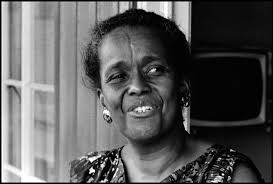
Early Life and Background
Ella Josephine Baker was born on December 13, 1903, in Norfolk, Virginia, and raised in Littleton, North Carolina. She grew up in a tight-knit, religious, and socially conscious family that emphasized the importance of education, self-reliance, and community service. Her grandmother, a former slave, played a major role in shaping Baker’s early worldview. Listening to her grandmother’s stories of resistance against white oppression deeply influenced Ella’s sense of justice and belief in grassroots organizing.
She attended Shaw University in Raleigh, North Carolina, one of the oldest historically Black colleges in the South, and graduated as class valedictorian in 1927. During her time at Shaw, she challenged the administration’s conservative policies, foreshadowing the activist path she would later take.
Becoming an Activist
After moving to New York City during the Harlem Renaissance, Ella Baker became increasingly involved in progressive politics. She joined various social and political organizations aimed at combating racial and economic injustice. One of her earliest roles was with the Young Negroes’ Cooperative League, where she advocated for economic empowerment through collective action.
In 1940, Baker began working with the National Association for the Advancement of Colored People (NAACP). She traveled extensively throughout the South as a field secretary, organizing local chapters and recruiting new members. By 1943, she became the NAACP’s highest-ranking woman, serving as Director of Branches. However, she often found herself at odds with the organization’s top-down leadership structure, which conflicted with her deeply held belief in grassroots democracy and participatory leadership.
Civil Rights Leadership and Influence
Baker’s most influential work came during the peak of the Civil Rights Movement. In 1957, she co-founded the Southern Christian Leadership Conference (SCLC) alongside Martin Luther King Jr. and other leaders. She served as the first interim executive director, helping to lay the organizational groundwork for the SCLC. Though she respected King’s leadership, she disagreed with the male-dominated hierarchy and the charismatic leader-centered approach to organizing.
In 1960, Baker played a crucial role in nurturing a new generation of activists when she organized a conference at Shaw University that led to the creation of the Student Nonviolent Coordinating Committee (SNCC). Unlike many established civil rights groups, SNCC emphasized bottom-up organizing, group-centered leadership, and direct action. Baker became a mentor to young activists like John Lewis, Diane Nash, and Stokely Carmichael. She encouraged them to listen to local communities, particularly in rural areas, and to empower ordinary people to lead their own struggles for justice.
Through SNCC and beyond, Baker was a powerful advocate for voter registration drives, school desegregation, and economic justice in the South, especially in deeply segregated states like Mississippi and Alabama.
Later Years and Death
Throughout the 1970s and 1980s, Ella Baker remained active in various movements for racial, economic, and gender justice. She lent her voice to issues involving the Puerto Rican independence movement, women’s rights, and anti-apartheid efforts in South Africa.
Ella Baker passed away on December 13, 1986—her 83rd birthday—in New York City. Although she never sought fame or credit for her work, she was widely revered among grassroots organizers for her unwavering dedication, humility, and radical belief in the power of the people.
Legacy
Ella Baker’s legacy lives on in many ways:
- She helped shape the democratic, non-hierarchical style of organizing that influenced countless activist movements after the 1960s.
- Her principles inspired later movements such as the Black Power Movement, Black Lives Matter, and community organizing networks throughout the United States.
- She is often remembered by the phrase: “Strong people don’t need strong leaders.” This quote encapsulates her belief in collective empowerment over individual hero worship.
Her life’s work underscored that real change happens from the ground up, not the top down.
Ella Baker Center for Human Rights – Oakland, CA
Founded in 1996 and named in her honor, the Ella Baker Center for Human Rights is based in Oakland, California. Co-founded by Van Jones, a civil rights advocate and environmental justice leader, the center continues Baker’s legacy of grassroots organizing and racial justice.
What They Do:
The Ella Baker Center works to transform the criminal justice system and promote alternatives to incarceration. Their initiatives focus on:
- Ending mass incarceration and state violence
- Investing in community-based programs for education, jobs, and housing
- Supporting youth leadership and empowerment
- Advocating for police accountability
- Providing support for families and individuals impacted by the criminal justice system
One of their most impactful campaigns was Books Not Bars, which sought to close California’s youth prisons and redirect funds to education. They also work alongside community members to develop restorative justice practices and promote policies that invest in community health, not punishment.
The Ella Baker Center continues to be a beacon for community-driven solutions, social equity, and racial justice.
References
- Ransby, Barbara. Ella Baker and the Black Freedom Movement: A Radical Democratic Vision. University of North Carolina Press, 2003.
- The Ella Baker Center for Human Rights. https://ellabakercenter.org
- SNCC Digital Gateway. “Ella Baker.” https://snccdigital.org
- NAACP History. https://naacp.org
- PBS. Eyes on the Prize. “Interview with Ella Baker.” https://www.pbs.org
- Civil Rights Teaching. “Ella Baker: Grand Strategist of the Civil Rights Movement.” https://www.civilrightsteaching.org
 Pan African Studies Encyclopedia