By: Tory Davis
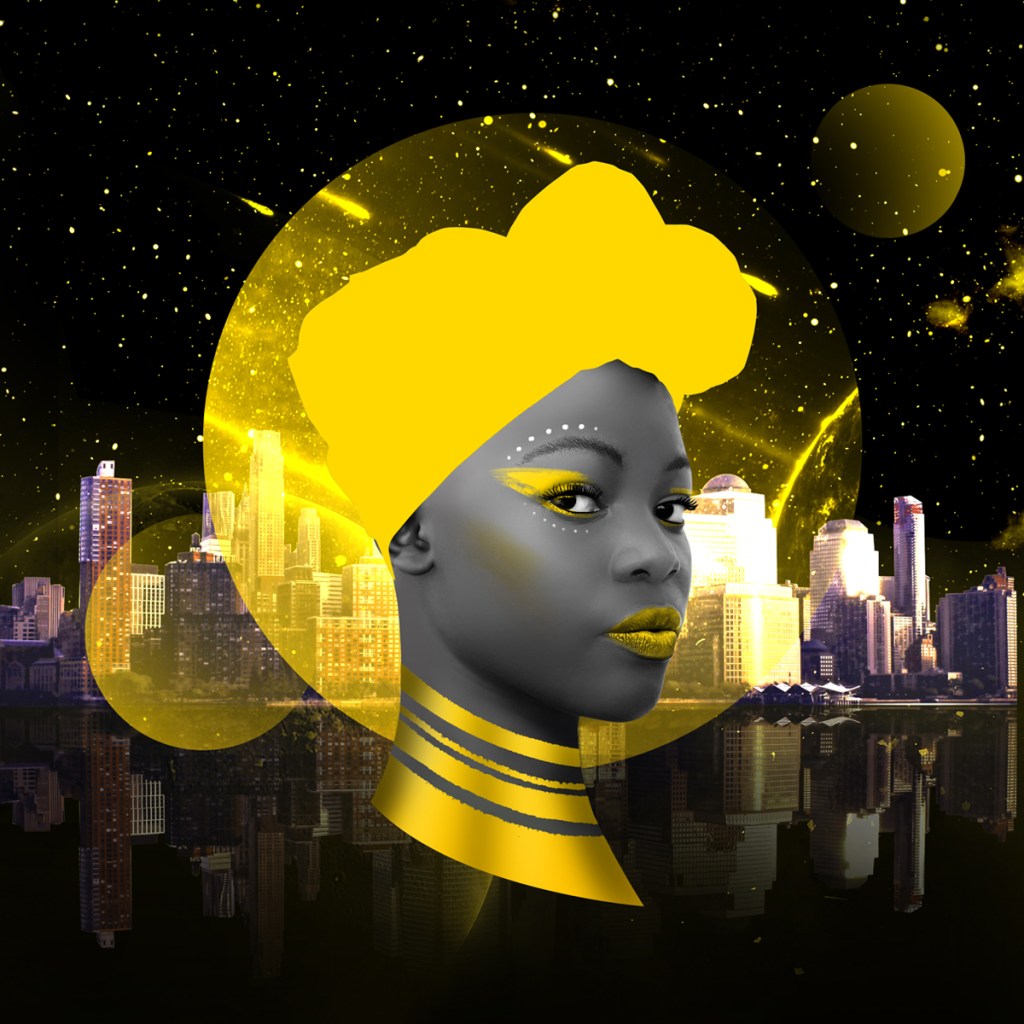
Keyword Essay: Afro-Futurism
Imagining a future of Africa/African diaspora culture comes from a term titled “Afro-Futurism which Mark Dery coined in an essay titled “Black to the Future.” While Dery questioned the lack of black science fiction in 1993, we have seen an emerging black culture cultivating the imagery of what Afro-Futurism is becoming. Afro-futurism can be embedded into multiple fields through art, aesthetics, architecture, media, and technology. Living in the present, focusing on the future, while drawing from African roots, is the concept that Afro-Futurism draws on to create a complete definition. The movie Black Panther, directed by CSUS Alumni Ryan Coogler,, gives a glimpse of how African-centric themes can be brought to cinema in a mainstream setting. Although we have had several examples of Afro-futurism from the creative minds of African people worldwide, Black Panther sparked the interest of an African-centric future in every aspect possible.
The framework for African/African American studies is rooted in history. In academia, we learn about different aspects of black culture, from colonialism to affirmative action. The leaders of black movements worked tirelessly to fill in the gaps of black continuity amid turmoil in the process—leaders such as W.E.B. DuBois, Booker T. Washington, Martin Luther King Jr, and Marcus Garvey sought to build communities of black people to create systems that were conducive to black liberation and equality. Each leader had their moment in history to have the ears and hearts of black people globally, but unfortunately succumbed to the oppressive nature of the state by being demonized as terrorists and a threat to the American people, and misunderstood on the African continent.
Our ancestors paved the way to ignite the black power structure we have today, and Afro-Futurism is a concept that will lead to a new foundation of black social structure. The inventions of technology, media, clothing, and space representing black culture are finding their way into our lives as we speak. We currently have many black political, economic, and social visionaries who are honoring our ancestors’ obligation to build legacies regarding cultivation that we will discuss in the future. I would argue that Afro-Futurism started when trailblazers such as O.W. Gurley envisioned creating a black socio-economic structure with Black Wall Street in Tulsa, Oklahoma. Wakanda, a fictional city portrayed in the movie Black Panther, demonstrates what a world would look like when brilliant black minds are taking the reins to provide a space where black people can thrive and construct a world free of colonialism and oppression. Black Wall Street and Wakanda are examples of honoring the past ideas and moving into a future where black people truly thrive. “The art that comes out of this genre not only conceptualizes the world through fiction and fantasy but challenges the world as it exists now. Being able to see yourself at the center of a story has great power, according to Womack: “Empowering people to see themselves and their ideas in the future gives rise to innovators and freethinkers, all of whom can pull from the best of the past while navigating the sea of possibilities to create communities, culture, and a new, balanced world.” (Alexander p.1)
“Afro Futurism is an art form, practice, and methodology that allows black people to see themselves in the future despite a distressing past and present.” (Inverse 1:16-122) While we continuously speak on how the past has shaped black culture, many creatives have created fictional pieces that illustrate what liberation entails in the future. An artist such as Tim Fielder creates comic books that are Sci-Fi related, that depict and reimagine our past. Tim Fielder creates comic books that have our leaders as fictional characters who fought against oppression. Afro-Futurism is garnering attention in future history books because the imagination of the black creative is slowly shaping out to become reality, but has the potential of what it could be like for us later on.
The power of the black mind shouldn’t be ignored. We have a representation of what Afro-Futurism is presently. When we look at events such as Afropunk, which is a music festival in which many black people gather to listen to music and express creative freedom with fashion, hairstyles, merchandise, and music. Afropunk is a music festival with a brand that is represented worldwide, bringing black creatives together in cities like London. Paris, New York, Atlanta, Washington D.C., and much more. Even music artists such as Erykah Badu, Andre 3000, EarthGang, and others give us music that represents black culture from a futuristic perspective.
Afro-futurism is represented in various ways that give a glimpse into black future possibilities. The term can represent many things, but it most represents dreaming out loud. Our ancestors’ radical act of imagination is the same radical imagination that Afro-futurism represents now. Afro-futurism represents hope for a better tomorrow for black people and what’s to come for our future generations. The concept looks to evolve into our own space and decrease the Western civilization we had to adapt to by force. Afro Futurism is the black future that we imagine and will continue to build on for years to come.
Works Cited:
Alexander, Sadof. “What Is Afrofuturism, and How Can It Change the World?” https://www.one.org/, 23 May 2018, http://www.one.org/us/stories/afrofuturism-change-the-world. Accessed 1 May 2025.
Black Enterprise. “What Is Afrofuturism?” YouTube, 12 Mar. 2018, http://www.youtube.com/watch?v=AgXujySEuIE.
Inverse. “Afrofuturism Explained: Not Just Black Sci-Fi | Inverse.” YouTube, 6 Mar. 2018, http://www.youtube.com/watch?v=154XnA1xcis.
 Pan African Studies Encyclopedia